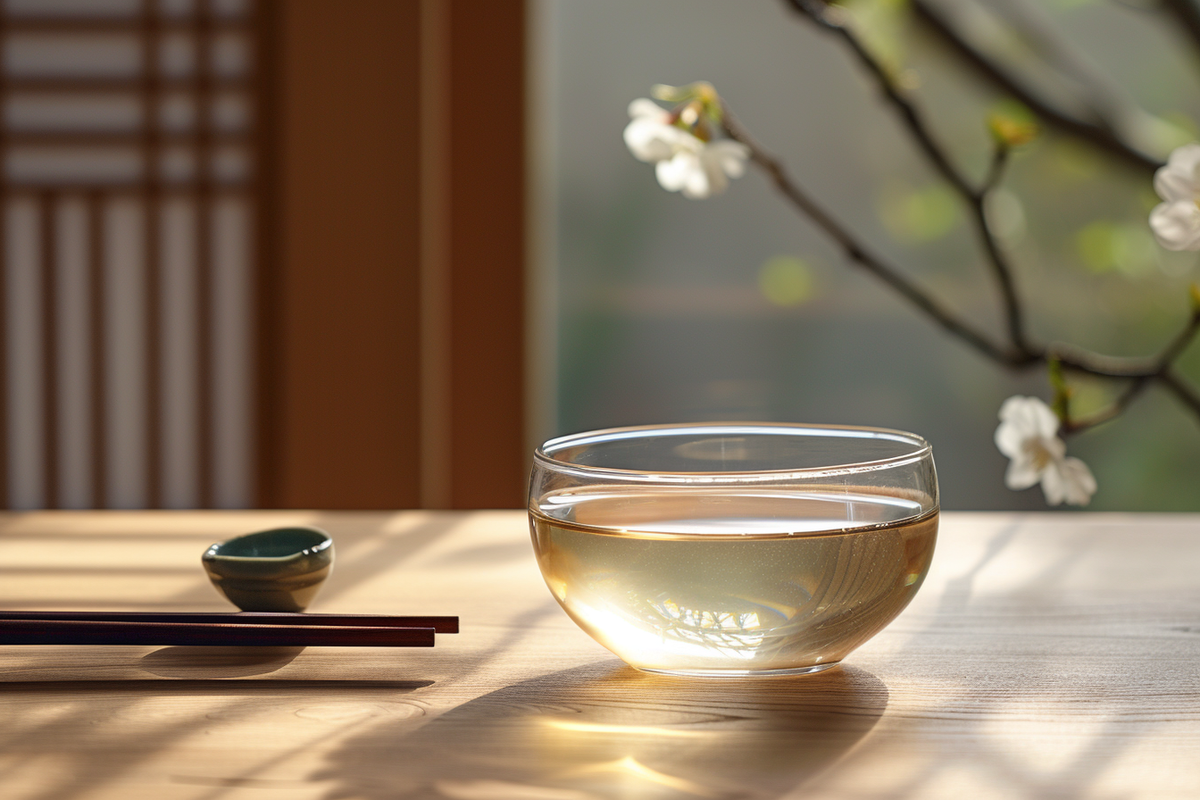
What is dashi?
In Japan, dashi is the collective term for broths that you extract from dried ingredients in a short time. Awase means combined: this dashi pairs kombu, a dried seaweed, with katsuobushi, dried and smoked bonito. The kombu supplies glutamate, the bonito inosinate. Together they taste much stronger than either ingredient alone. There are also plain kombu dashi, niboshi dashi from dried sardines and the vegan shiitake dashi. When instant powder is worth it is explained in the article Dashi and dashi powder.
The right ingredients
- Kombu: Buy thick, dark sheets. Rishiri and Rausu kombu give a clear, fine broth, while Hidaka kombu is softer and tastes stronger. The white coating on the surface is not mold, it carries flavor.
- Katsuobushi: For dashi, use large, thin flakes. The fine flakes in small bags are meant for sprinkling and make the broth cloudy.
- Water: Soft water draws the flavor out of the kombu better. If you have very hard tap water, use filtered water or still mineral water with low calcium.
You can get both ingredients at an Asian grocery store. Stored sealed and dry, they keep for several months.
How to make dashi: the key steps
- Wipe instead of wash: Run a damp cloth over the kombu. Under running water you rinse the flavor away.
- Soak for a long time: 30 minutes in cold water is the minimum. If you have time, let the kombu steep overnight in the fridge. This cold method is called mizudashi and gives an especially clear broth.
- Heat slowly: Set the stove to medium or low. As soon as small bubbles form at the edge of the pot, take the kombu out.
- Steep the bonito briefly: Bring the water to a boil, take the pot off the heat and sprinkle in the flakes. After 2 to 3 minutes they sink to the bottom.
- Strain without pressure: Pour the broth through a sieve lined with paper towels or a cloth and let it run through by itself.
Common mistakes
- Kombu boils along: The broth turns slimy and tastes harsh.
- Flakes squeezed: The dashi turns cloudy and gets a bitter, fishy note.
- Bonito cooked too long: After more than 1 minute in bubbling water the broth tastes sharp. Take the pot off the heat before you add the flakes.
What you need dashi for
With dashi and a spoonful of miso you have a miso soup with tofu and shiitake in 5 minutes. For tamagoyaki you stir a few tablespoons into the eggs, and for chawanmushi egg sets with three times the amount of dashi into a delicate custard. Seasoned with soy sauce and mirin, it becomes the noodle broth for kitsune udon. Braised dishes like nikujaga and dips like tentsuyu for tempura also start with dashi.