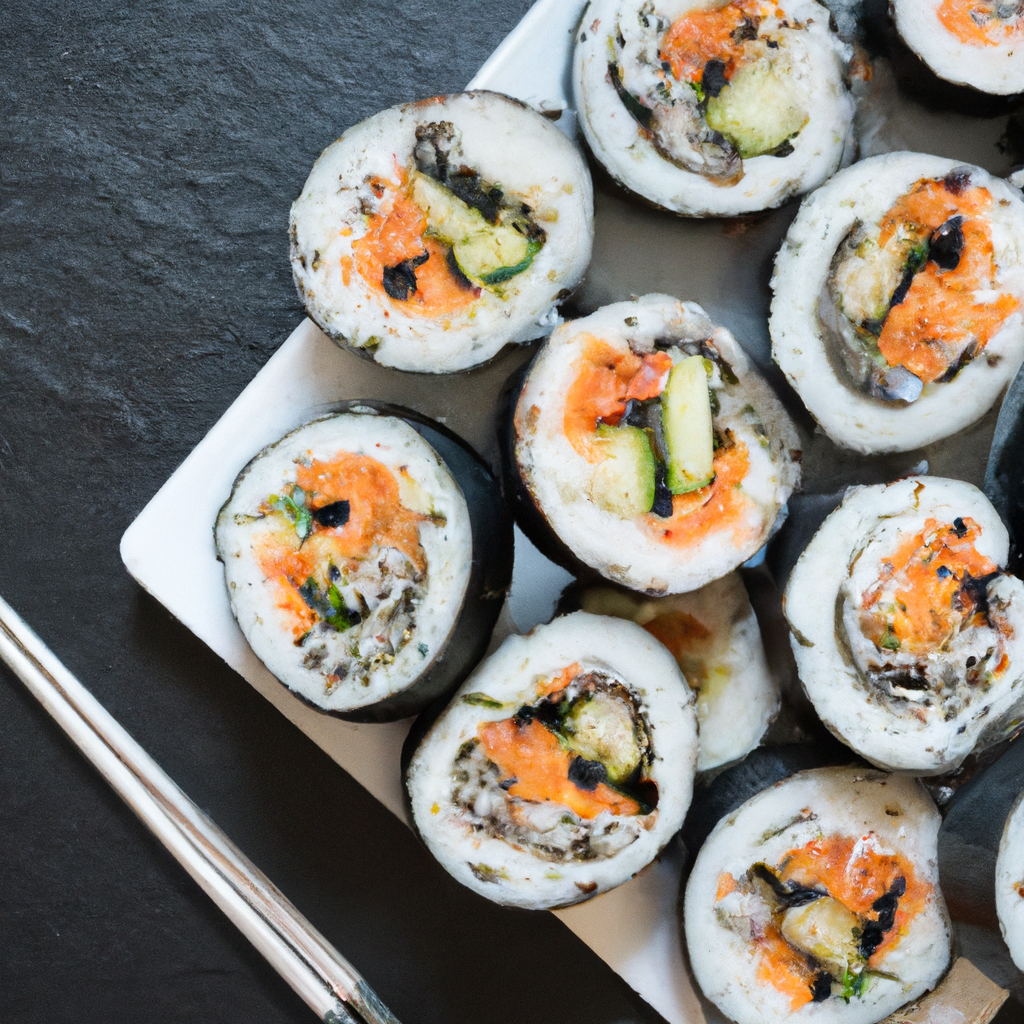
What is gimbap?
Gim (김) means seaweed, bap (밥) means rice. Kimbap is the same word in an older romanization. In Korea, people pack gimbap for outings, picnics and long train rides, and in the cities whole snack chains sell almost nothing but gimbap. From the outside, a roll looks like maki, which is why it is often called a Korean sushi roll. The difference lies in the rice and the filling: gimbap contains cooked meat, egg and vegetables, and raw fish rarely goes in.
Original gimbap: rice with sesame oil
For sushi, you season the rice with vinegar and sugar. Korean cooks mix the warm rice with sesame oil and salt. The recipe card uses the sushi seasoning, so the rolls taste slightly sour. For the Korean version, leave out the rice vinegar and sugar and stir 1 tbsp of toasted sesame oil and 1 tsp of salt into the rice. In both cases, use short-grain rice. Long-grain rice is not sticky enough, and the roll falls apart when you cut it. The recipe for sushi rice explains how to wash and cook it.
The right ingredients
- Gim: Buy large, unseasoned seaweed sheets made for gimbap or sushi. Salted snack seaweed is too small and too oily. You can read more about buying it under nori.
- Danmuji: The yellow pickled radish brings acidity and bite. In an Asian grocery store, you can get it in long strips, cut for gimbap.
- Beef: Marinate the strips like bulgogi with soy sauce and garlic and fry them until no liquid is left in the pan. Wet meat softens the seaweed.
- Spinach: In many Korean families, blanched spinach with sesame goes into the roll, like in sigeumchi namul. The card leaves it out, but you can add it.
How to roll
Place the gim shiny side down on the bamboo mat. With wet hands, spread about 170 g of rice in a thin layer and leave 3 cm (1 in) free at the top edge. Lay the fillings close together across the bottom third. Roll from the bottom up, press the mat down after every half turn and pull it back so it does not roll in. A few crushed rice grains on the free edge seal the roll. Let it rest seam side down for 2 minutes before you brush it with sesame oil.
To cut, use a sharp knife and wipe it with a damp cloth after every cut. With a sawing motion, cut slices about 1.5 cm (1/2 in) thick.
Common mistakes
- Too much rice: The roll gets thick, the filling slips out of the center and the seaweed tears.
- Wet fillings: Pat the cucumber and carrot dry and let the omelet cool before you roll.
- Gimbap in the fridge: The rice turns hard. Eat the rolls on the same day. Dip leftover slices in beaten egg and fry them in a pan.
Vegetarian gimbap and other variations
For vegetarian gimbap, replace the beef with strips of tofu fried in soy sauce, or with fried shiitake. The egg and the radish stay in. For a vegan roll, leave out the omelet and use more spinach and carrot. In Korea, tuna with mayonnaise, fish cake or cheese also go into the roll. You know the roll with the rice on the outside as uramaki, and the slim Japanese roll with little filling as maki sushi. As a side, serve a small bowl of kimchi and a clear soup.