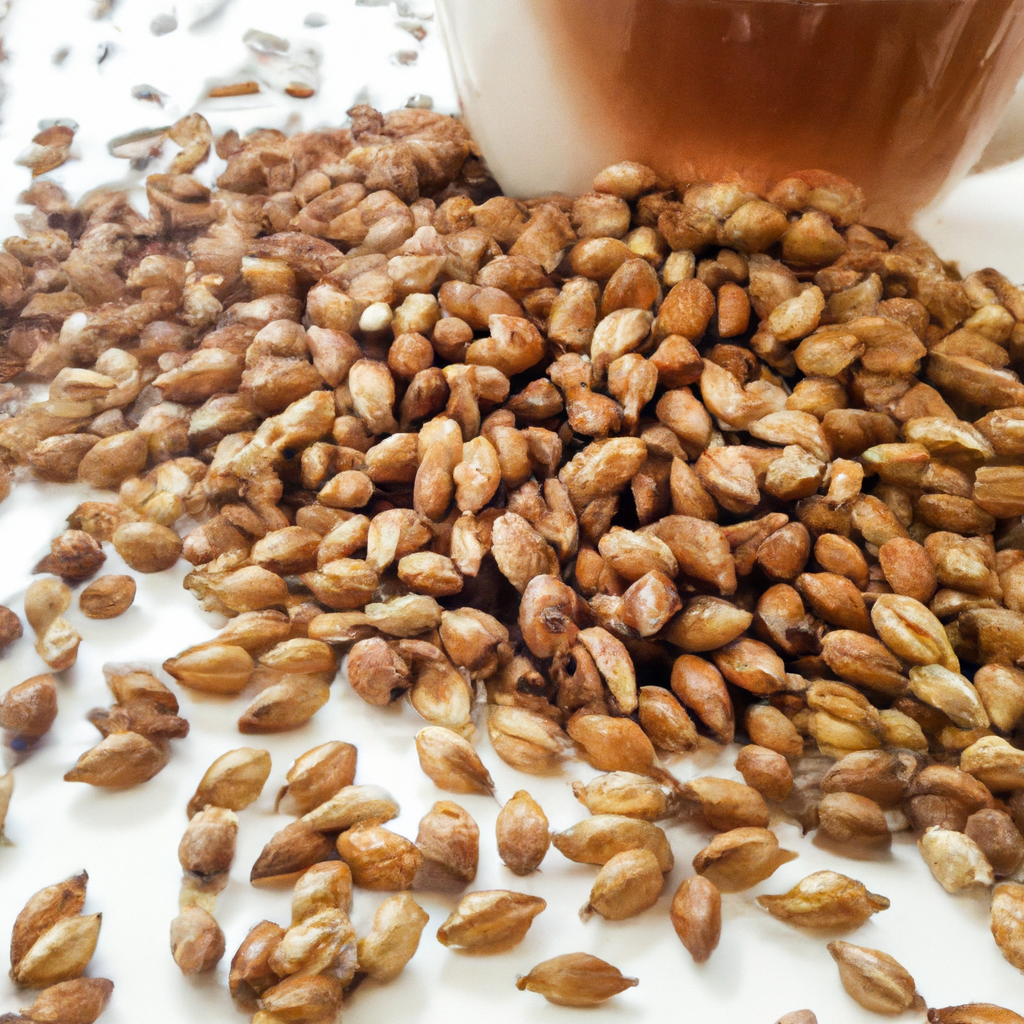
What is boricha?
In many Korean households a bottle of boricha sits in the refrigerator and takes the place of tap water. Restaurants often put a pitcher of it on your table without you ordering it. Barley tea contains no tea leaves and so no caffeine, which means you can drink it in the evening too. In Japan the same drink is called mugicha, and people drink it ice cold in summer.
Barley contains gluten. If you have celiac disease, use corn tea, oksusu-cha in Korean, which you cook the same way.
Making barley tea: the ingredients
Buying roasted barley
At an Asian grocery store you can get roasted barley in bags of 500 g or 1 kg, labeled roasted barley or 볶은 보리. The kernels are dark brown and smell like coffee. Next to them are tea bags with ground barley, and one bag is enough for 1 to 2 liters. The bags steep faster, while with whole kernels you control the strength more precisely.
Roasting barley yourself
You can roast pearl barley from the supermarket yourself. Wash the kernels, let them drain, and roast them in a dry pan over medium heat for 15 to 20 minutes, stirring, until they are dark brown and fragrant. Let them cool on a plate and fill a screw-top jar.
How to get the barley tea right
The recipe card uses 30 g of barley per 1 liter of water. Put the kernels in cold water, bring everything to a boil, and simmer the tea over low heat for 30 minutes. The longer it simmers, the darker and stronger it tastes. For a mild tea, halve the barley or take the pot off the heat after 15 minutes. Pour the tea through a fine sieve. You can boil the kernels a second time with fresh water, and the tea will be lighter.
Cold brewing
For mugicha the Japanese way, put a tea bag in a carafe with 1 liter of cold water and refrigerate it for 2 to 3 hours. This makes the tea taste softer and less roasted.
Storing
Cooked barley tea keeps in the refrigerator for 2 to 3 days. Fill a clean glass bottle with a lid once it has cooled. If it smells sour or turns cloudy, pour it out.
Common mistakes
- Unroasted barley: Raw kernels make a pale tea that tastes like grain porridge.
- Too much barley: With more than 40 g per liter the tea tastes bitter and reminds you of cold coffee.
- Sugar and milk: In Korea, boricha comes to the table plain. With spicy or fatty food, the unsweetened tea cleanses the palate.
More teas from Korea and Japan
If you like roasted flavors, try the Japanese genmaicha with green tea and roasted rice. It turns fruity and sweet with yuja-cha made from citrus marmalade, and tart with omija-cha. Ssukcha, made from mugwort, tastes herbal. As a cold finish after a meal, Koreans like to serve sikhye, a sweet rice drink.