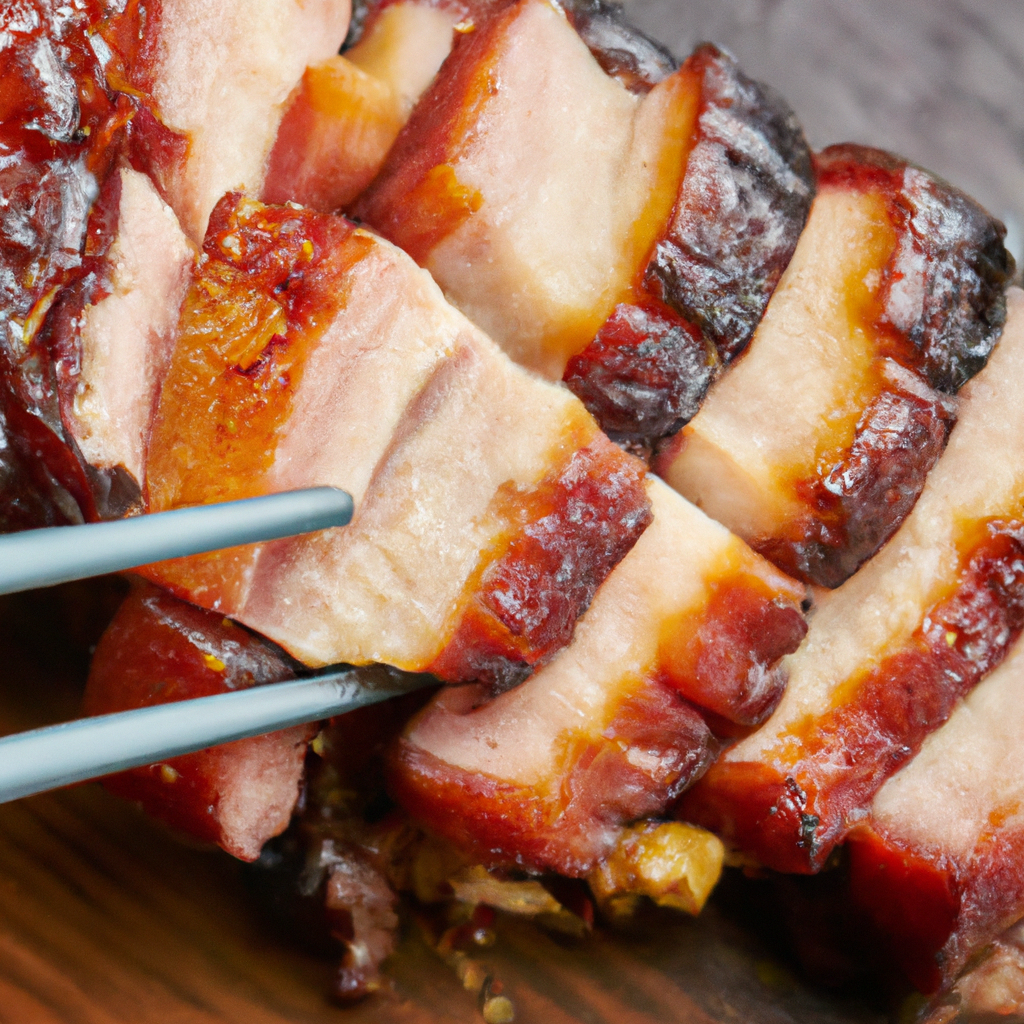
What is cha shao?
Cha shao is the Mandarin pronunciation of 叉烧, and in Cantonese the dish is called char siu. The name means “fork-roasted”: cooks used to thread long strips of meat onto skewers and hold them over the fire. In Hong Kong and Guangzhou today, the meat hangs in the windows of roast-meat shops next to roast duck. You eat it sliced over rice, in noodle soups and as the filling of char siu bao.
Marinating pork shoulder the Asian way
Use pork shoulder. The fat between the fibers keeps the meat juicy during 50 minutes in the oven, while tenderloin and lean cutlet meat dry out. Cut the shoulder into strips about 4 cm thick, so the marinade soaks in and the crust gets enough surface.
- Hoisin sauce brings sweetness and color. You can read more about the sauce under hoisin sauce.
- Soy sauce seasons the meat. Light soy sauce is enough, and a teaspoon of dark soy sauce makes the crust darker. You can find the difference under light and dark soy sauce.
- Five-spice powder contains star anise, cinnamon, fennel, cloves and Sichuan pepper. Half a teaspoon is enough for 500 g of meat, and more tastes of licorice.
- Rice wine: Shaoxing wine gives the typical aroma. Dry sherry comes close.
Let the meat marinate for at least 2 hours, better overnight in the refrigerator. Turn the strips once in between so all sides take on color.
How to get cha shao right in the oven
Bake on a rack
Lay the strips on a rack over a baking sheet with a little water. The hot air reaches the meat from all sides, and the dripping marinade doesn't burn in the water. Baking paper works too, though the underside stays paler.
Save the marinade
Don't pour the marinade away. Boil it for 2 minutes in a small pot with the honey for glazing, and brush it onto the meat as you turn it. Boiling it is a must, because the marinade has touched raw meat.
Glaze and toasted flavor
Honey burns after a few minutes at 180 °C (350 °F). Brush it on only in the last 5 minutes. For the dark, slightly charred edges, switch on the broiler (grill) afterward for 2 to 3 minutes and stay at the oven. Check doneness with a meat thermometer: at a core temperature of about 70 °C, the shoulder is done. Let the meat rest for 10 minutes, then slice it across the grain.
The red color
In the original, fermented red tofu or red yeast rice powder (hong qu) colors the crust. Many roast-meat stalls use food coloring today. On the recipe card, the color is optional and changes nothing about the taste. Without it, your cha shao turns dark brown.
Common mistakes
- Cuts that are too lean: Tenderloin is dry after 50 minutes. Use shoulder or pork belly.
- Strips too thin: Under 3 cm thick, the meat dries out before the crust is ready.
- Honey too early: The glaze turns black and bitter.
- Sliced right away: The meat juices run onto the board instead of staying in the meat.
What to serve with it
In Hong Kong, you lay slices of cha shao over white rice, with steamed bok choy and a spoonful of reduced marinade. Cut leftovers into cubes for Yangzhou fried rice or use them as a filling for baozi. The Thai version is called moo daeng and sits on egg noodles in Ba Mee Moo Daeng. For braised pork belly with soy sauce and sugar, see the recipe for Hong Shao Rou.