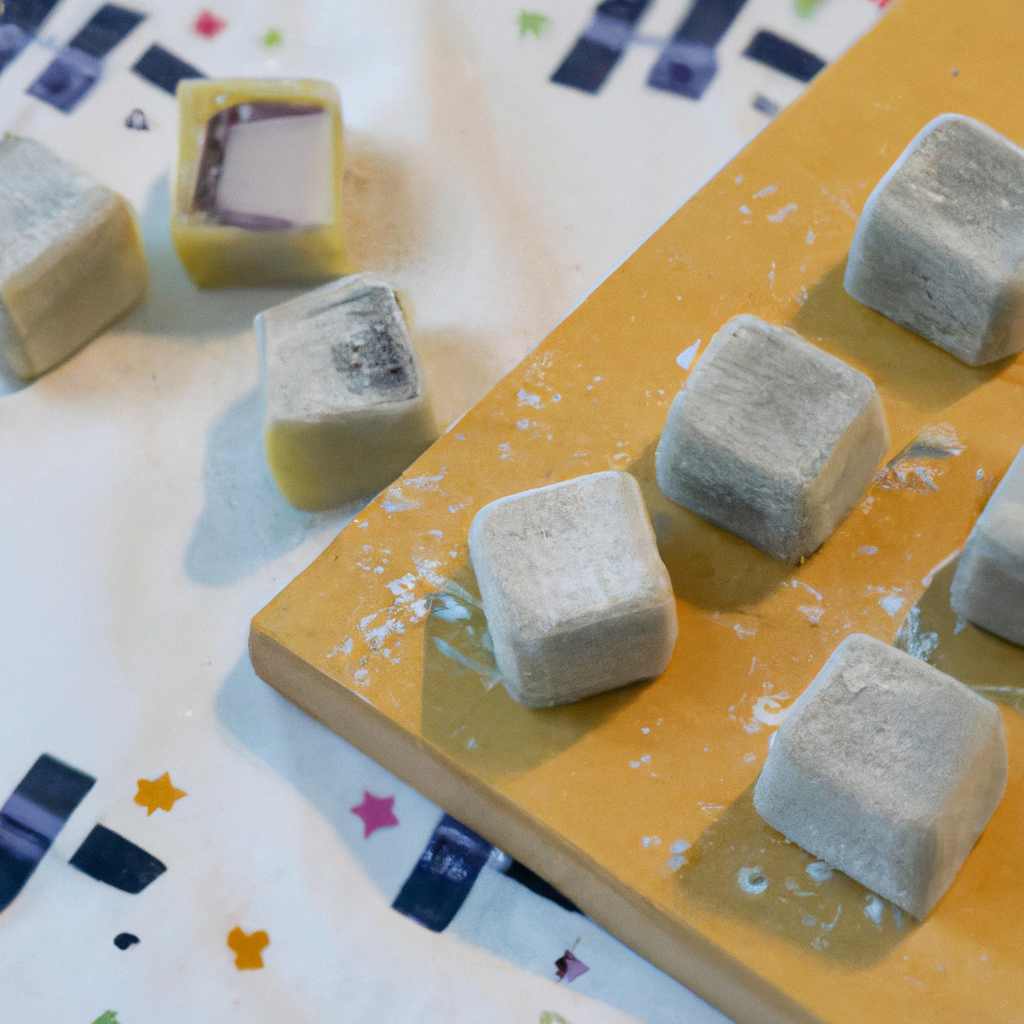
What is mochi?
In Japan, mochi first names the dough: steamed glutinous rice (mochigome) that is pounded into a sticky mass in a large wooden mortar. This pounding is called mochitsuki and is part of the New Year in many families. Many sweets are made from the dough, such as daifuku with a bean filling or ichigo daifuku with a whole strawberry. At home you use glutinous rice flour, which is rice that is already ground. Stir it with water and cook it, and you get the same elastic texture. How to cook whole glutinous rice is covered in Cooking sticky rice.
The right ingredients
- Glutinous rice flour: The package says mochiko, shiratamako, or glutinous rice flour. The inexpensive Thai glutinous rice flour from an Asian grocery store works well. Regular rice flour is no good, because the dough stays crumbly and does not turn elastic.
- Starch for dusting: In Japan people use katakuriko, which is potato starch. Cornstarch works just as well. Wheat flour is not suitable, because it tastes raw.
- Sugar: It sweetens the dough and keeps it soft for longer.
- Anko: The sweet azuki bean paste comes ready-made in cans or pouches, smooth as koshian or chunky as tsubuan.
How to make mochi: the key steps
Cook in short intervals
Cook the dough in short bursts and stir in between with a wet spatula. After the first round the mass is firm at the edge and liquid in the middle, and after the second it is lumpy. It is done when it is translucent and glossy all over and pulls away from the spatula in a sticky stretch. At 800 watts that takes 3 to 4 minutes. If the center is still white and matte, add 30 seconds.
Shape while warm
Dust the work surface thickly with starch, tip the hot dough onto it, and dust the top as well. Let it cool only until you can handle it. Cold mochi turns firm and can no longer be sealed. With a floured bench scraper, divide it into 10 pieces of about 50 g each.
Filling
Press one piece flat, put a ball of 20 g anko in the middle, and pull the dough up around it. Pinch the seam closed and set the mochi down seam side down. Chilled anko is easier to roll into balls.
Common mistakes
- Cooked too long at once: Several minutes without stirring make the dough hard and rubbery at the edge.
- Too little starch: The dough sticks to the surface, your hands, and the knife. Use plenty and brush off the rest at the end.
- Mochi in the refrigerator: Cold makes the dough hard. Eat mochi the same day or the next day.
- Wrong flour: Regular rice flour or wheat flour does not make mochi.
Variations
Color the dough green with 1 tsp of matcha powder or replace 2 tbsp of water with strawberry puree. Instead of anko, peanut butter with a little sugar, black sesame paste, or a piece of fruit works. For mochi ice cream, wrap small scoops of ice cream in the dough and freeze them right away. Small boiled glutinous rice dumplings are called shiratama dango, and grilled skewers with a sweet soy glaze are known as mitarashi dango. The Korean relative is called chapssaltteok.