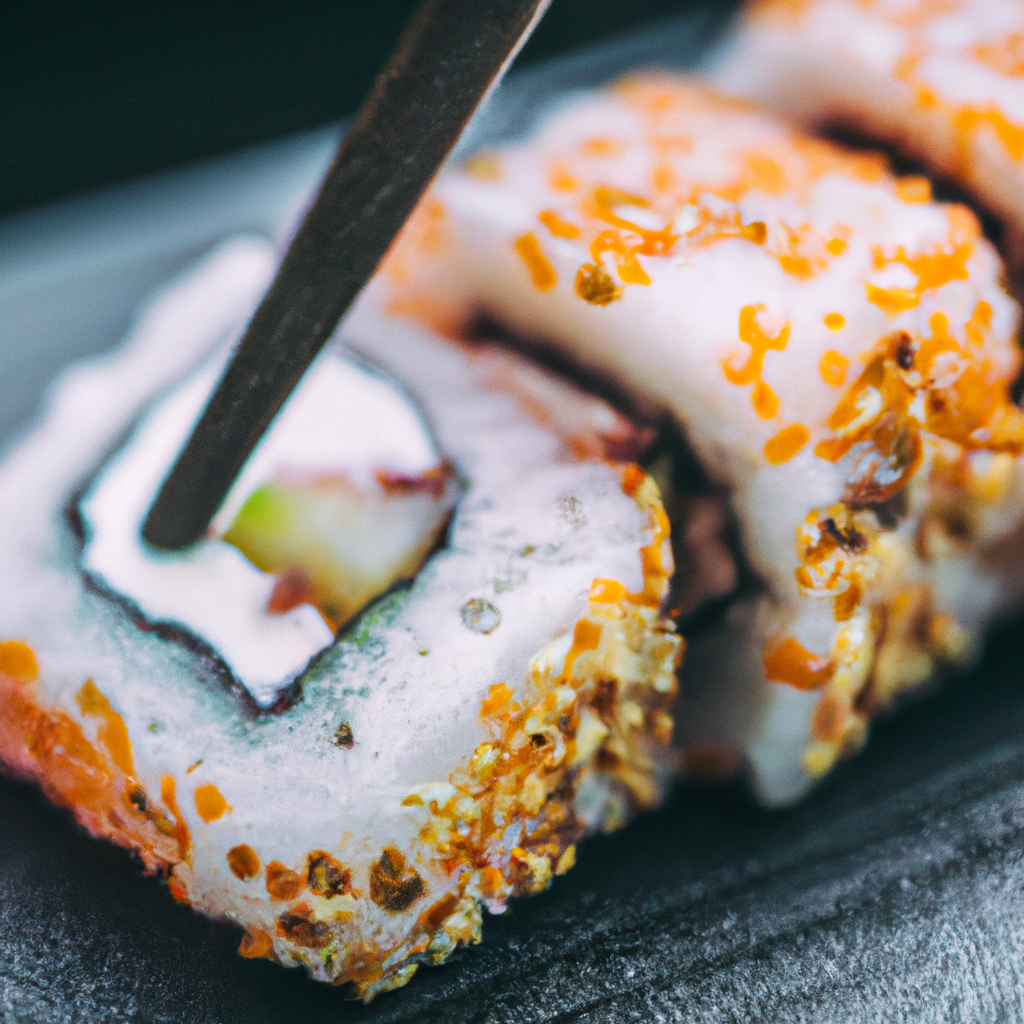
What Is Uramaki?
Ura means reverse side in Japanese, and maki means roll. For an inside-out roll, you flip the nori over after spreading the rice on it and roll the filling up on the seaweed side. This style came out of North America, and the best-known uramaki is the California roll. In Japan, you more often get thin hosomaki with the nori on the outside.
Rice and Nori
Uramaki need well-seasoned, sticky sushi rice, because it holds the roll together from the outside. The basic recipe for sushi rice explains cooking and seasoning step by step. For the seasoned vinegar, use mild Japanese rice vinegar. For each roll made with half a sheet of nori, count on about 120 g of cooked rice.
Nori has a smooth, shiny side and a rough side. Spread the rice on the rough side, where it sticks better. Halve the sheets along the lines pressed into many of them. You'll find more on varieties and storage under nori.
How to Roll Uramaki
- Prepare the mat: Wrap the bamboo mat tightly in plastic wrap. Without it, the rice sticks in the grooves.
- Hand water: Set out a bowl of water with a splash of rice vinegar. With damp fingers you can spread the rice without it sticking to your hands.
- Spread the rice: Press the rice out loosely to all the edges. If you crush the grains, the roll turns dense and pasty.
- Flip and fill: Sprinkle sesame seeds over the rice, flip the sheet over and lay the filling on the lower third of the nori. More than three ingredients won't fit in half a sheet.
- Roll: Lift the mat, roll up the filling and press the roll into shape with both hands. Pull the mat forward as you go, or you'll roll it in.
- Cut: Wipe a long, sharp knife with a damp cloth. Cut the roll in half first, then each half into four pieces. Wipe the blade again after every cut.
Fillings: California, Alaska and Vegetarian
- California uramaki: Surimi or crab meat, avocado and cucumber, with tobiko or sesame on the outside.
- Alaska uramaki: In German sushi bars, Alaska stands for salmon with avocado, often with cucumber. Use sushi-grade salmon or smoked salmon.
- Vegetarian: Avocado, cucumber, pickled radish and scallion. A strip of omelet makes the roll more filling.
Calories in Inside-Out Sushi
Roughly calculated from the ingredients on this card, a serving of two rolls comes to 550 to 600 kcal, and a single piece to 35 to 40 kcal. Most of that comes from the rice with sugar, followed by avocado and sesame. Rolls with mayonnaise, cream cheese or tempura filling are higher. For exact values, weigh your ingredients and calculate with a nutrition table.
Common Mistakes
- Cold rice: Rice from the fridge no longer sticks. Roll with body-temperature rice.
- Too much filling: The roll won't close and splits open when you cut it.
- Dull knife: It squashes the roll instead of cutting it.
If you want sushi without a rolling mat, try temaki, the cones made of nori, or nigiri with fish on rice balls.