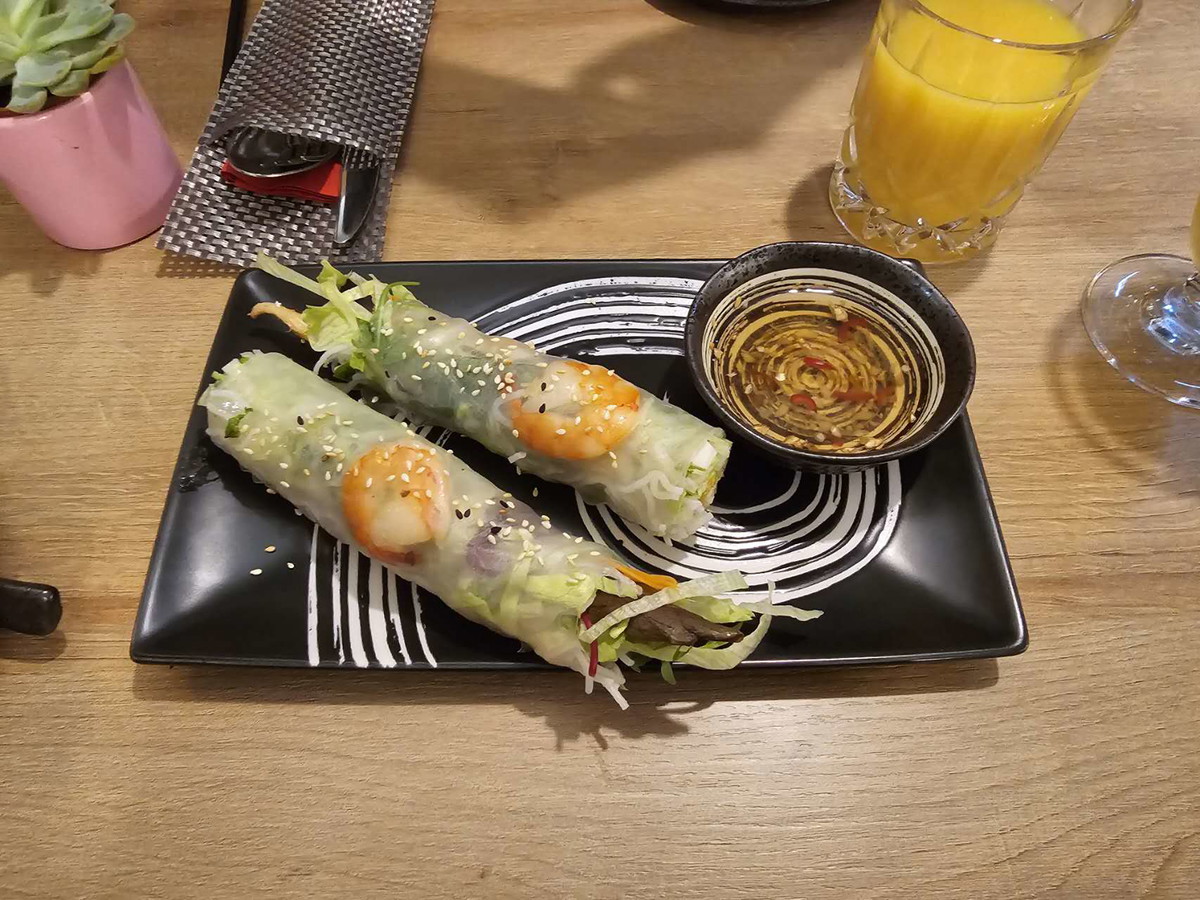
What are nama harumaki?
Harumaki is the Japanese word for spring roll. In Japan, without any qualifier it means the deep-fried roll you know from Chinese restaurants. Nama means “raw” or “fresh,” so nama harumaki is the unfried version made with rice paper. The recipe comes from Vietnam, where the rolls are called Gỏi Cuốn. In Japan you order them in Vietnamese restaurants and in izakayas as a light appetizer.
Fried and fresh harumaki
For deep-fried Japanese harumaki, you wrap a bound filling of pork, glass noodles, shiitake and bamboo shoots in thin wheat dough wrappers. The Vietnamese Chả Giò, on the other hand, you fry in rice paper. The fresh version on this page needs no pot of oil and suits warm days.
The right ingredients
- Rice paper: Round sheets 22 cm across are easy to roll. You can get them at an Asian grocery store and in many supermarkets. Thin types tear more easily, and thick ones turn chewy.
- Noodles: The recipe card uses glass noodles made from mung beans. Thin rice noodles work too and are a little softer. Rinse the noodles cold after cooking and let them drain.
- Herbs: Mint and cilantro give the rolls their fresh aroma. If you don't like cilantro, use Thai basil or shiso. With shiso the rolls taste more Japanese.
- Shrimp or tofu: Cut cooked shrimp in half lengthwise. Fry tofu in slices beforehand, and it won't fall apart when you roll.
How to make the rolls
Soak the rice paper briefly
Dip the sheet in warm water for about 5 seconds and lay it on a damp board or a kitchen towel. It still feels a little firm and softens over the next half minute. If you soak it too long, the sheet sticks to itself and tears when you roll.
Layering
First lay a lettuce leaf on the lower third, then noodles and vegetables on it. The lettuce leaf protects the rice paper from sharp carrot ends. Put the shrimp and herbs in the middle of the sheet, above the filling. After the first fold they sit directly under the rice paper.
Roll tightly
Fold the bottom edge taut over the filling, tuck in the sides and keep rolling with a little tension. Loosely rolled summer rolls fall apart when dipped.
Common mistakes
- Too much filling: The rice paper tears. A small handful per roll is enough.
- Wet ingredients: Pat cucumber and lettuce dry, or the paper gets soggy from the inside.
- Rolls packed tightly: They stick together and tear when you separate them. Lay them on the platter with space between, or wrap each in plastic wrap.
- Overnight in the refrigerator: The rice paper turns hard. Eat the rolls on the same day.
Dips and variations
The dip on the recipe card combines hoisin sauce with peanut butter. You can cook a peanut sauce of its own with the recipe for peanut sauce. A dip of soy sauce, rice vinegar and a little wasabi tastes more Japanese. For a version with fish, roll in raw sushi-grade salmon with avocado and shiso.
More Japanese appetizers
For a small menu, put nama harumaki next to edamame and a sunomono cucumber salad. You prepare all three dishes ahead, and nothing is left to cook at the table.