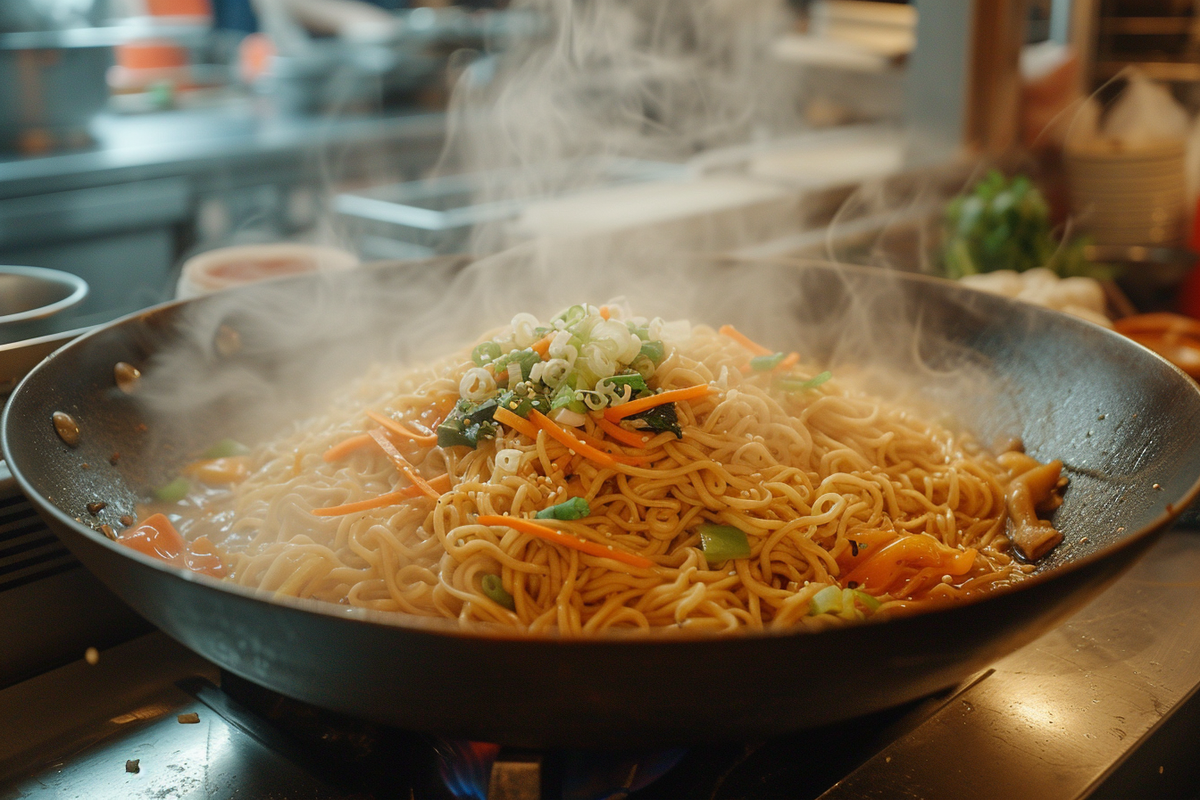
What are soba noodles?
Soba means buckwheat in Japanese. The noodles are gray-brown, thin and square in cross-section. Juwari soba is 100 percent buckwheat flour, and hachiwari soba is 80 percent buckwheat and 20 percent wheat flour. In the supermarket you mostly find dried soba with even more wheat. If wheat flour is first on the ingredient list, the package contains more wheat than buckwheat. You can read more about types and cooking times at soba noodles.
Botanically, buckwheat is a knotweed relative and contains no gluten. Still, only soba made from pure buckwheat and labeled as such on the package is gluten-free.
Soba, ramen and udon compared
Ramen noodles are made from wheat flour and kansui, an alkaline salt that gives them their firm bite and yellow color. Udon are thick, white wheat noodles with a soft bite. Soba sit in between in thickness and have the strongest flavor. In Japan you eat them cold with a dipping sauce or hot in broth. Yakisoba from Japanese street stalls is made from wheat noodles similar to ramen, despite the name. For the wok version here, use real buckwheat soba.
The right ingredients
- Soba: For the wok, hachiwari or soba with a higher wheat share are best. Pure buckwheat soba is brittle and falls apart when tossed.
- Tofu: Use firm tofu, wrap it in paper towels and weigh it down with a plate for 10 minutes. Dry tofu spatters less and browns.
- Mirin: The sweet rice wine rounds off the soy sauce. You can find substitutes and the differences from sake at mirin.
- Sesame oil: Add toasted sesame oil only with the sauce. At high heat it turns bitter.
How to make soba in the wok
Undercook the noodles slightly
Cook the soba in plenty of boiling water for one minute less than the package says. Drain them and rub them between your hands under cold water until the water runs clear. This removes the starch that would otherwise glue everything together in the wok. A few drops of sesame oil on the drained noodles keep them loose until you need them.
Vegetables in the right order
Heat the wok until the oil shimmers. Carrot and bell pepper take longer than snow peas and scallions, so add them a minute earlier. An overcrowded wok cools down, and the vegetables stew in their own juice. With a small pan, fry in two batches.
Noodles last
Add the noodles and sauce only at the end and fold them in with two spatulas or tongs. After two minutes the noodles are hot. If you stir longer, they break.
Common mistakes
- Soft-cooked noodles: They fall apart into short pieces in the wok.
- Not rinsed: The noodles stick together in a lump.
- Too much soy sauce: Beyond about 3 tbsp you barely taste the buckwheat. Add salt at the end instead.
Variations
Instead of tofu, chicken breast in thin strips or shrimp work. For heat, stir a teaspoon of chili oil into the sauce. In summer, eat soba cold, as zaru soba with dipping sauce or as soba noodle salad with bamboo shoots. On cold days, cook kitsune soba in hot broth with sweet simmered tofu.